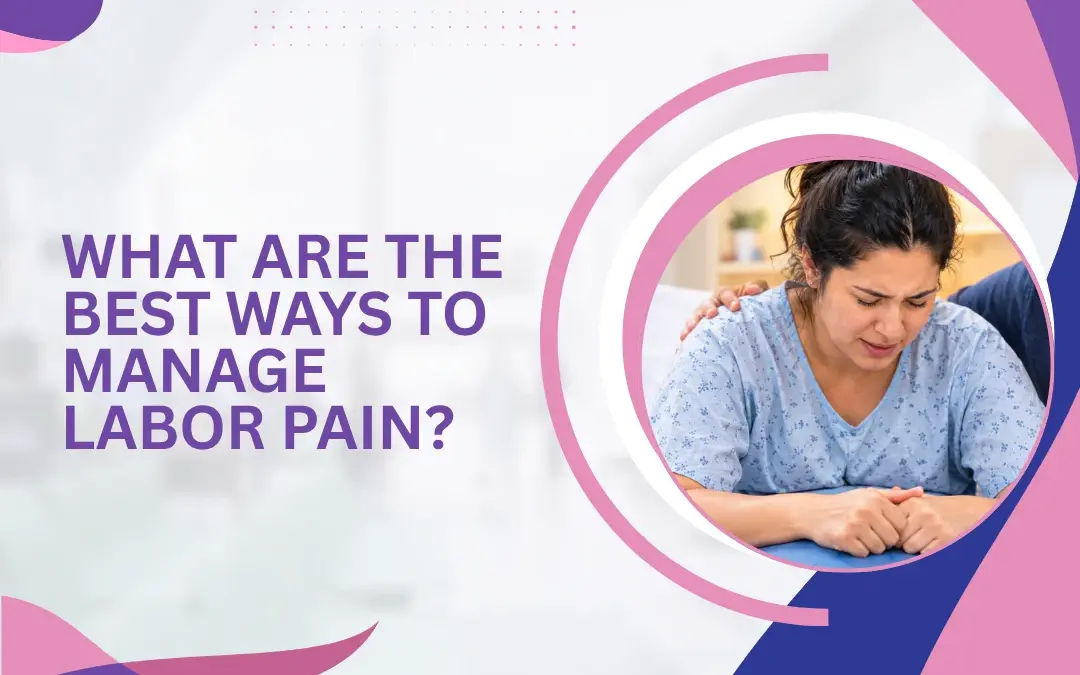
According to Dr. Amit Agrawal, gynecologist in Nerul, “Labor pain doesn’t have one solution that works for everyone. Some manage well with breathing and movement alone. Others need an epidural, and that’s a valid choice too. The plan should match the person, not the other way around.”
What Non Medical Techniques Help With Labor Pain?
Breathing and relaxation: Slow, controlled breathing keeps you from tensing up during contraction. It won’t remove the pain, but it does make it easier to manage.
Movement and position changes: Walking, swaying, or rocking on a birthing ball helps labor progress and takes pressure off certain areas. Staying still often makes contractions feel worse.
Water therapy: A warm shower or birthing tub eases muscle tension and takes the edge off contraction intensity for many women. Worth trying early in labor.
Continuous support: A doula, partner, or nurse offering steady encouragement measurably changes how labor pain gets experienced. Presence matters more than people expect.
When breathing and movement aren’t quite enough, that’s usually the point where our painless delivery program takes over, walking you through the medical options in detail.
When Should You Consider Medical Pain Relief for Labor?
Non medical methods don’t always cover it. That’s where medical options come in.
Epidural analgesia: The gold standard for significant pain relief, numbing the lower body while keeping you awake and alert through delivery.
Timing matters: Epidurals typically get administered once labor is well established, usually past 4 to 5 centimeters of dilation. Too early can slow things down.
Nitrous oxide: A lighter option than an epidural, inhaled through a mask during contractions. Takes the edge off without full numbness.
IV pain medication: Used less often now, but still an option for short term pain relief, earlier in labor. Doesn’t remove pain entirely, just dulls it.
Pain relief is only part of the picture as labor nears. Keeping track of your baby’s movements is important too, especially in the final weeks. Here’s what to know about baby movement patterns.
Why Choose Dr. Amit Agrawal for Labor Pain Management?
Questions about epidurals, natural methods, or anything in between get honest, practical answers here. Patients walk into labor informed, not anxious. Call +91 8850461614 to book your appointment.
Frequently Asked Questions
Is an epidural safe for labor pain relief?
Can breathing techniques alone get you through labor?
Does walking during labor actually help?
When is it too late for an epidural?
References
- NCBI/PMC: The Barriers to Offering Non Pharmacological Pain Management as an Initial Option for Laboring Women: https://pmc.ncbi.nlm.nih.gov/articles/PMC9186088/
- NCBI/PMC: Pharmacological and Non Pharmacological Methods of Labour Pain Relief: Establishment of Effectiveness and Comparison: https://pmc.ncbi.nlm.nih.gov/articles/PMC6313325/
Disclaimer:
This blog is intended for general educational purposes only and doesn’t replace personalized medical advice. Please discuss your pain relief options and birth plan with your obstetrician.