
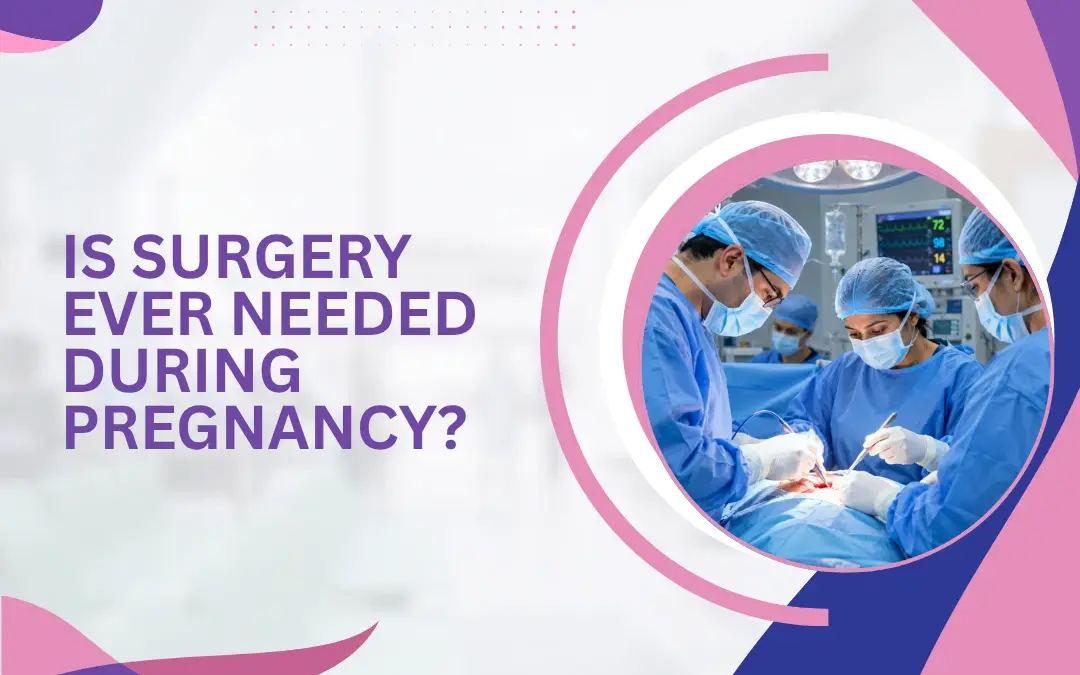
Surgery during pregnancy isn’t common. But it happens when waiting poses more danger than treating does. Appendicitis. Gallstones. A twisted ovarian cyst. None of these wait for a due date. So doctors weigh surgery for pregnancy against the cost of delay, and more often than not, acting fast is what protects both mother and baby.
According to Dr. Amit Agrawal, gynecologist in Nerul, “Nobody takes this decision lightly. But an infected appendix or a twisted cyst isn’t going to wait nine months. We time it right. We pick the safest approach. Anesthesia gets involved early. Delaying often carries more risk than the procedure itself.”
When Does Pregnancy Actually Need Surgery?
A short list of conditions covers most surgery for pregnancy cases every year. Knowing them helps you spot when something needs urgent attention.
Appendicitis: Still the top reason for emergency surgery in pregnancy. It shows up in roughly 1 in 1,500 pregnancies, and waiting too long raises the risk of rupture fast.
Ovarian cysts: A cyst that twists or ruptures brings sudden severe pain. It needs prompt surgery no matter the trimester.
Gallstone disease: Shows up in about 1 in 1,600 pregnancies. Rest alone doesn’t always settle the pain or infection, and surgery becomes the next step.
Trauma or bleeding: Severe injury or internal bleeding always jumps the queue. Surgery gets decided within hours. Not days.
When a pregnancy carries this kind of complication, it usually falls under our high risk pregnancy monitoring, so nothing gets managed in isolation.
How Do Doctors Make Surgery Safer During Pregnancy?
Once a patient is pregnant, the whole approach shifts. Every choice now accounts for two patients, not one. That covers everything from the drugs used to when the procedure actually happens.
Timing by trimester: The second trimester is usually the safest window if surgery can wait. Organ formation is done by then, and the risk of preterm labor drops.
Anesthesia adjustments: Drug choices shift to protect the baby. Blood pressure gets watched closely the entire time.
Laparoscopic approach: The preferred route whenever it’s possible. Smaller incisions mean faster recovery and less strain on the body.
Continuous fetal monitoring: The baby’s heart rate gets tracked before and after surgery. Any distress gets caught early.
Pain that doesn’t quite fit a textbook description is common in pregnancy, and our pelvic pain during pregnancy guide covers what else might explain it.
Why Choose Dr. Amit Agrawal For High Risk Surgical Decisions?
Dr. Amit Agrawal has over 10 years of experience in gynecology and obstetrics, with more than 300 deliveries guided personally. His credentials include an MBBS, MS and DNB, plus FMAS certification and a Fellowship in Infertility and Urogynecology. Surgical decisions during pregnancy never happen in isolation. The right specialists get pulled in every time.
Every case gets judged on its own risk profile. Surgeons and anesthesiologists get pulled into that conversation whenever it’s needed. Call +91 8850461614 to book your appointment.
Worried a Health Issue Might Need Surgery During Pregnancy?
Quick evaluation often makes the biggest difference here.
Frequently Asked Questions
Is surgery safe if I'm pregnant?
Generally yes, when it’s medically necessary. Modern anesthesia and monitoring keep it safe in most cases.
Which trimester works best for non emergency surgery?
The second trimester, generally. Emergencies, though, get treated immediately regardless of timing.
Could surgery put the baby at risk?
The risk stays low with proper precautions in place. Leaving an emergency untreated is far riskier.
What surgery comes up most often in pregnancy?
Appendix removal. It’s the leading cause of non obstetric surgery in pregnant women.
References
- NCBI/PMC: Anaesthesia for Non-obstetric Surgery in Obstetric Patients: https://pmc.ncbi.nlm.nih.gov/articles/PMC6144550/
- NCBI/PMC: Anaesthesia for Non-obstetric Surgery During Pregnancy: https://pmc.ncbi.nlm.nih.gov/articles/PMC4840802/
Disclaimer:
This blog is educational only and doesn’t replace medical advice. Please consult your obstetrician about your specific case.