
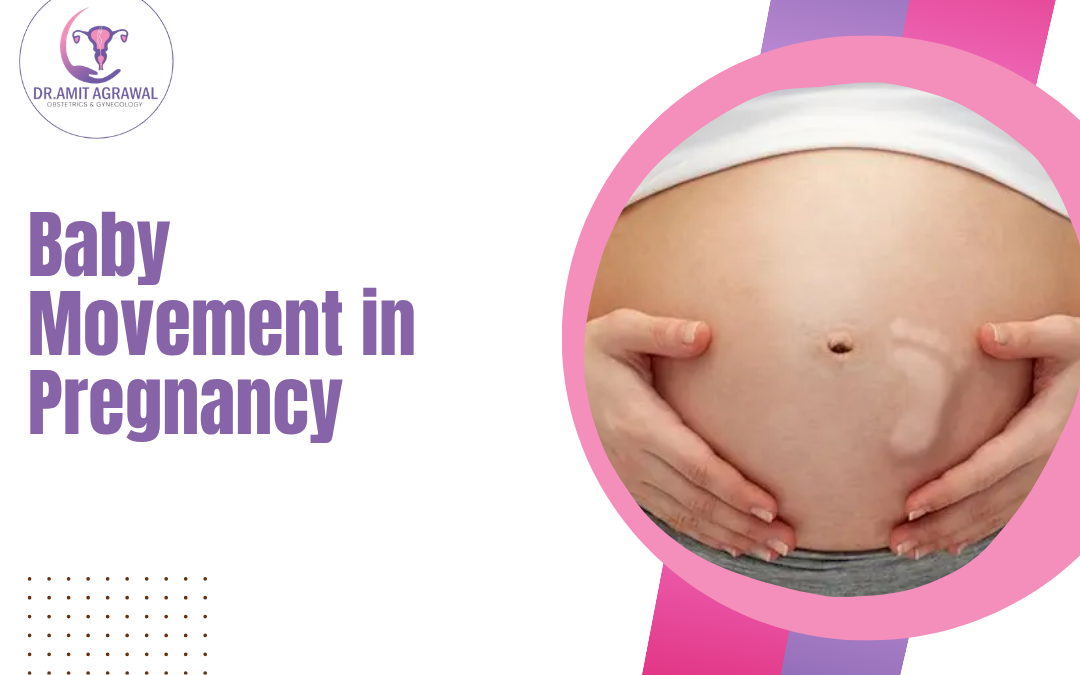
There’s a special kind of joy in feeling your baby move for the first time that tiny flutter that makes pregnancy feel wonderfully real. As the weeks go by, it’s also natural to wonder whether your baby’s movements are normal. In fact, baby movement in pregnancy is one of the most common concerns expectant mothers discuss with their gynecologist. Understanding what to expect and when to seek medical advice can help you feel more confident throughout your pregnancy.
Dr. Amit Agrawal emphasizes that while every pregnancy is different, a noticeable change in your baby’s usual movement pattern should always be evaluated by a healthcare professional.
When Can You First Feel Your Baby Move?

The first noticeable fetal movements, often referred to as “quickening,” are usually felt between 16 and 25 weeks of pregnancy. If this is your first pregnancy, you may notice these movements a little later typically between 20 and 25 weeksnas it can take time to recognize the sensation. Women who have been pregnant before often identify these early movements sooner, sometimes as early as 16 weeks, because they are already familiar with how they feel.
In the beginning, baby movements are often subtle and may feel like gentle flutters, tiny bubbles, or light tapping inside the abdomen. If you have an anterior placenta (where the placenta is positioned at the front of the uterus), these early movements may be less noticeable or felt slightly later, as the placenta can cushion your baby’s movements.
It’s important to remember that every pregnancy is different. The timing and pattern of baby movement in pregnancy can vary from one woman to another, and a slight difference in when you first feel your baby move is usually completely normal.
How Baby Movement Changes Throughout Pregnancy
As your baby grows, so does the way you experience their movements.
- Second trimester (weeks 18–27): Movements become more frequent and noticeable, though still irregular. You’ll likely feel more activity in the evening or when you’re resting.
- Third trimester (weeks 28 onward): This is when your baby’s movement pattern becomes more established, and it’s also when doctors recommend you start paying closer attention. Kicks feel stronger, and you may start noticing hiccups, rolls, and stretches alongside jabs.
- Close to full term: Many women assume movements slow down simply because there’s less room to move. In reality, the number of movements shouldn’t drop off — only the style may change, from big rolling motions to shorter jabs and wriggles, since there’s less space for large gestures.
By your third trimester, you’ll start to know your baby’s unique pattern — their active hours, their quiet spells, their favourite time to practise hiccups. That familiarity becomes one of your best tools for noticing when something feels off.
What Can Affect Baby Movement?

Several everyday factors can influence how much movement you feel, without anything being wrong:
- Your activity level — you tend to notice movement more when you’re still, like lying down at night.
- Blood sugar — movements sometimes pick up after you eat.
- Baby’s sleep cycles — Your baby naturally has quiet periods while sleeping, which usually last between 20 and 40 minutes.
- Medications — certain sedatives or strong pain relief can temporarily reduce movement.
- Position of baby’s back — if it’s facing outward, kicks may feel less distinct.
None of these should cause a lasting drop in your baby’s overall movement pattern just occasional day-to-day variation.
When Should You Worry About Reduced Baby Movement?
The first and foremost rule to remember while pregnant is that if you notice that your baby has started to move less, you should never ignore it. No one knows just how many kicks each day any baby should be making, since each baby has a different movement pattern. The important thing is to be able to identify what is normal for your baby and watch for any deviations.
Seek medical advice that your movements are unusual, if they become weaker or if you do not feel any movements for a long time. This is particularly important if you are a high-risk pregnancy and your healthcare provider might want to monitor you more closely. By about 28 weeks it might be suggested that you relax in a quiet spot and start to count how many moves your baby is making. If movement significantly decreases, or if you are still worried, reach out to your gynecologist or maternity health care provider immediately. Better to be safe and take the time to get checked, than to wait and worry.
Frequently Asked Questions
1. How many times should my baby move a day?
2. Babies move less in the last weeks of pregnancy, is this correct?
3. Will an anterior placenta impact my baby's movements?
4. Do babies kick around more at night?
References: https://my.clevelandclinic.org/health/articles/23497-kick-counts
https://www.nhs.uk/best-start-in-life/baby/baby-moves/
Disclaimer:
This blog is for informational and educational purposes only and should not be considered medical advice. Please consult Dr Amit or a gynecologist for personalised dietary and pregnancy guidance.