Somewhere around the second trimester, everyone starts sharing their delivery stories. A relative swears normal delivery is the only “real” way. A friend had a C-section and says it was the best decision she made. Meanwhile you’re just trying to work out what’s actually right for you.
Here’s the thing most people don’t say out loud: neither method wins by default. The right one is whichever keeps you and your baby safest, and that depends on your pregnancy, not on anyone else’s.
This guide walks through how the decision is made, so your next appointment feels like a conversation and not a surprise.
“There is no single right way to deliver. The safest option depends on the mother’s health, the baby’s condition, and how the pregnancy is progressing.”
Normal Delivery vs. C-Section: Key Differences
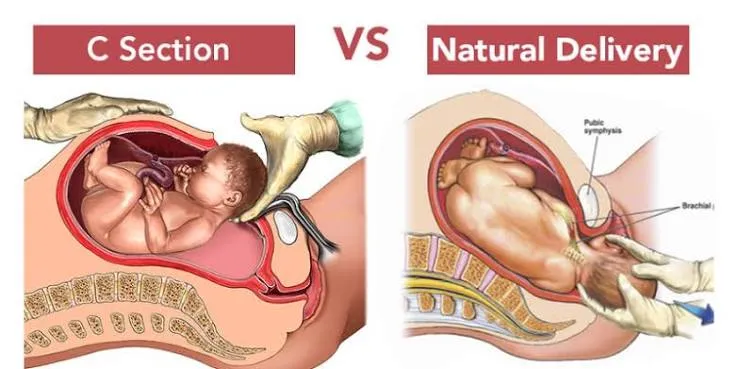
In a normal (vaginal) delivery, your baby is born through the birth canal. A C-section is surgery: the baby is delivered through a cut in your abdomen and uterus. Both are common, and both are safe when they’re the right fit.
Normal Delivery | C-Section | |
How the baby is born | Through the birth canal | Through an incision in the abdomen |
Hospital stay | Usually 1 to 2 days | Usually 2 to 4 days |
Recovery | A few weeks | About 6 to 8 weeks |
Pain relief | Epidural or other options during labour | Spinal or epidural anaesthesia for surgery |
Scarring | Possible tear or episiotomy | Scar on the lower abdomen |
Main risks | Tears, heavy bleeding, pelvic floor problems | Infection, blood loss, slower recovery |
If you’re curious about pain relief in labour, our guide on epidurals and pain relief during labour covers what to expect.
Book a visit with our maternity specialist and get advice based on your own pregnancy.
How Does a Doctor Decide Between Normal Delivery and C-Section?
It’s rarely one single factor. Your doctor looks at the whole picture, and a few things carry the most weight.
Your baby’s position. Head-down is what doctors hope to see. If the baby is breech (bottom or feet first) or lying sideways, a C-section is often the safer route.
Your baby’s size and wellbeing. Growth scans, heart rate and the amount of amniotic fluid all help your doctor judge whether labour is likely to go smoothly.
Your own health. Conditions like high blood pressure, diabetes or heart disease can change the plan. If you’ve been told you have a high-risk pregnancy, expect your doctor to plan the delivery a bit more closely.
The placenta. When it sits low and covers the cervix, a condition called placenta previa, a vaginal birth isn’t safe because of the risk of heavy bleeding.
Your history. A previous C-section or other surgery on the uterus makes a difference.
Twins or more. Some twins can be born vaginally, depending on how they’re lying. Others need a C-section.
How labour unfolds. Sometimes the plan changes on the day. If labour stalls or your baby’s heart rate shows signs of stress, your team may switch to a C-section quickly.
Whatever they decide, the aim is simple: a healthy mother and a healthy baby.
When Is a C-Section Planned in Advance?
A planned C-section is booked ahead of time when your doctor already knows a vaginal birth would carry extra risk. Typical reasons include:
- The baby is breech or lying across the womb
- Placenta previa
- A previous vertical (classical) cut on the uterus
- Certain infections, such as active genital herpes or HIV with a high viral load
- Twins or multiples where vaginal birth isn’t advised
- A medical condition that makes labour unsafe
- A very large baby, in some cases
Planned C-sections are usually scheduled for 39 weeks of pregnancy or later, unless there is a medical reason to deliver earlier. One advantage of a scheduled date is that it gives you time to arrange leave from work, support at home and your hospital bag in advance.
Can You Choose Normal Delivery or a C-Section?
For low-risk pregnancies, vaginal delivery often is fairly easy to plan. If you wish to have a C-section without a medical reason it would be best to discuss this openly with your doctor. Most can talk about it and will discuss with you the advantages and disadvantages including how it might affect a subsequent pregnancy. Don’t feel like you are being judged for asking.
Plans can also change, too. If there’s a risk to either the mother or the baby, a vaginal birth might have to be performed as a c-section. It is not your fault and preparing for the possibility of a change of plan is a very sensible part of preparing for birth.
Still unsure which option suits you?
Talk to our obstetrician and get honest, judgement-free advice.
Which Is Safer: Normal Delivery or C-Section?
In a healthy pregnancy, vaginal delivery is generally the lower-risk option for the mother and allows for a faster recovery. A C-section is a major abdominal operation, so it carries a greater risk of infection, heavy bleeding and blood clots, and it may have implications for future pregnancies.
There are, however, many situations in which a C-section is the safer route. When the baby shows signs of distress, or when the placenta is covering the cervix, surgery can be life-saving.
Ultimately, the safest method of delivery depends on the mother’s health, the baby’s condition and the circumstances of the birth. There is no single answer that applies to every pregnancy, which is why your doctor’s assessment matters more than any general rule.
Frequently Asked Questions
Is a normal delivery better than a C-section?
Not necessarily. If a pregnancy is considered low-risk, vaginal delivery is likely to be a quicker process and has reduced risks of complications. But if there are medical reasons for a C-section, then it will be a safer procedure for the mother and baby.
What are the factors for doctors to consider when deciding to perform a cesarean section?
It is based on the baby’s position, size and heart rate, the mother’s health and her previous deliveries. In a few instances, this is obvious long before the event. In others, it only comes into expression at the time of labour.
Can I have a vaginal delivery after a C-section?
In many cases, yes. This is called VBAC – Vaginal Birth After Caesarean. Women who had a single low-transverse C-section may be good candidates, and between 60 percent to 80 percent of women who try it have a successful delivery. Your doctor will discuss your medical history with you to help you determine.
Can a planned vaginal delivery end in a C-section?
Yes and, it does occur more than some people think and especially in first pregnancies. A caesarean section may be recommended if the baby is not progressing or if the mother or baby requires more care. It is a safety measure to ensure that it is safe for both of you and it does not mean that you did or did not do something wrong.
Disclaimer:
This blog is educational only and doesn’t replace medical advice. Please consult your obstetrician about your specific recovery.