

You’ve just found out or you suspect that you might be pregnant. And then, right around the time your period is due, you spot some bleeding. It throws you off completely. Is this your period? Did something go wrong? Are you even pregnant at all?
Here’s the thing: once you’re pregnant, a true period can’t happen. But bleeding that looks a lot like one shows up more often than people expect, especially in that first month. Let’s get into why that happens, how to tell it apart from an actual period, and when it’s worth picking up the phone and calling your doctor.
“A true menstrual period does not occur during pregnancy, but bleeding in early pregnancy can happen for several reasons. It is important not to assume that every episode of bleeding is a period.”— Dr. Amit Agrawal
Why You Might Bleed Even Though It's Not a Period
A period occurs when the uterine lining sheds after pregnancy has not occurred in that cycle. Once implantation takes place, however, the body shifts course. Rising progesterone levels help maintain and stabilise the uterine lining rather than allowing it to shed. Strictly speaking, then, a true period during pregnancy is not possible. What appears to be one is, in fact, something else entirely.
A few things tend to be behind it:
Implantation bleeding. This is probably the most common culprit. Around the time your period would normally show up, the fertilised egg burrows into the uterine lining. That process can cause a small amount of spotting, usually lasting no more than a day or two.
Hormonal changes. In the very earliest weeks, your hormone levels are still climbing. Some women notice a bit of light spotting simply as their body adjusts to the new normal.
A more sensitive cervix. Pregnancy sends extra blood flow to the cervix, which makes it more delicate than usual. Sex, a pelvic exam, or even minor irritation can bring on light spotting that has nothing to do with the pregnancy itself being at risk.
How common is bleeding in early pregnancy?
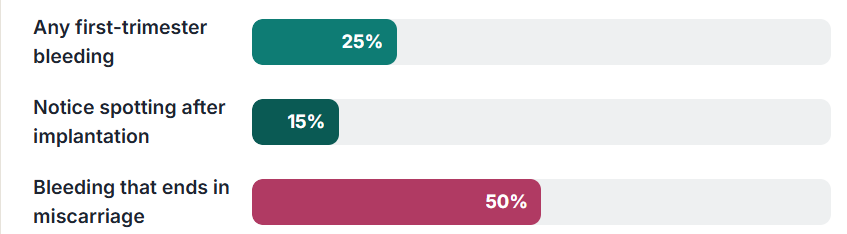
Period or Pregnancy Spotting — How Do You Tell?
Honestly, it’s not always easy, especially if you’re not someone who tracks your cycle closely. Still, there are a few patterns that usually hold up:
- Flow. A period tends to start light and build up over a day or so. Pregnancy-related spotting usually stays light the whole time and rarely picks up in intensity.
- Colour. Menstrual blood runs from bright red to a deeper red, sometimes with clots. Early pregnancy spotting is more often pink or brown — closer to old blood than fresh.
- How long it lasts. Periods generally run three to seven days. Implantation spotting is usually done within 24 to 48 hours.
- Cramping. Both can come with cramps, but period cramps tend to be stronger and follow a more rhythmic, wave-like pattern.
None of this is a guaranteed way to tell the two apart, though. If there’s any real chance you’re pregnant, a pregnancy test is still the most reliable way to know for sure — take it about a week after the bleeding, once hormone levels have had time to build up.
When It's More Than "Just Spotting"
Light bleeding that shows up once and fades within a day or two usually isn’t something to panic over. But there are a few signs that mean it’s time to call your doctor rather than wait and see:
- Bleeding heavy enough to soak through a pad within an hour
- Passing blood clots or tissue
- Sharp, one-sided abdominal pain
- Shoulder pain alongside bleeding (this combination can point to an ectopic pregnancy)
- Dizziness, fainting, or a racing heartbeat
- Bleeding with fever or an unusual-smelling discharge
None of these symptoms automatically mean something has gone wrong. But they’re worth getting looked at quickly rather than hoping it resolves on its own.
Not sure if your bleeding is normal?
Don’t ignore unusual bleeding or pain. Get evaluated and have your concerns addressed with proper pregnancy care.
What To Actually Do About It?

If you notice bleeding and aren’t sure whether you’re pregnant, the first step is a home pregnancy test. For the most reliable result, wait until a few days after your missed period rather than testing at the first sign of spotting.
If the test comes back positive and the bleeding continues, avoid the temptation to search for answers online. Instead, call your gynaecologist or arrange an early ultrasound. This can rule out anything serious and offer real reassurance, rather than more uncertainty.
It also helps to keep a simple record of what you’re experiencing when the bleeding began, how heavy it is, and any other symptoms that accompany it. This information can make your conversation with your doctor far more productive and help them arrive at an accurate assessment more quickly.
Frequently Asked Questions
Can implantation bleeding be mistaken for a light period?
Yes, quite easily. Early pregnancy is not always noticed in the beginning as the implantation bleeding is around the time when a woman would expect her period to start. There are a few differences from the red dandelion: it is typically lighter in color, shorter in duration and pink or brown rather than bright red.
How many days after implantation can you take a pregnancy test?
Most doctors suggest waiting a week or so after your missed period to test – after the implantation period. If it is done early, there may be a false negative result because the hCGs are still increasing.
Is it normal to have cramping along with early pregnancy spotting?
Some cramping is normal and not a reason for worry as the uterus is changing quite a bit during early pregnancy. But, one-sided or severe or worsening pain is another issue and deserves an immediate evaluation.
Can stress cause bleeding in early pregnancy?
Although stress isn’t a direct cause of bleeding, it can sometimes be linked to changes in the hormones. If you have bleeding and are concerned about it, it is well worth having it looked at, just to be safe and to give you peace of mind that it is not something else.
Does bleeding always mean a miscarriage is happening?
No. Women who bleed early in pregnancy often have a successful pregnancy. Bleeding does not diagnose a disorder – it is a sign that people need medical assessment.